

CONTACT:
Amelia Perrin
Communications Manager
P: 919-619-4913
E: [email protected]
Project Coyote Calls on Colorado Parks and Wildlife to Ensure Accountability when Wolves Die as “Coyotes”
Advocacy group renews demand for a shortened coyote hunting season and support for the law after a licensed hunter kills a reintroduced gray wolf they claim to have mistaken for a coyote
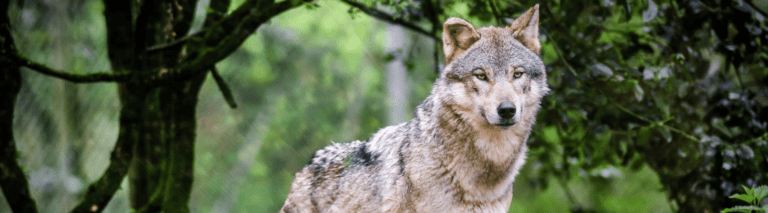
DENVER, CO AUGUST 10, 2026 – Project Coyote is calling on Colorado Parks and Wildlife (CPW) to strengthen protections for coyotes after a joint investigation by CPW and the U.S. Fish and Wildlife Service determined that a female gray wolf died on Jan. 16 from a gunshot wound inflicted by a licensed hunter who thought they were killing a coyote. The wolf, tagged 2504, was one of 15 wolves relocated to Colorado from British Columbia in January 2025 as part of the state’s wolf reintroduction program.
Her death marked the twelfth wolf mortality, and the seventh among that British Columbia cohort, since reintroduction began in December 2023.
CPW said officers cited the hunter for violating agency regulations but are not pursuing further charges. The hunter reported the incident and cooperated with the investigation.
However, killing a gray wolf in Colorado is illegal under both state and federal Endangered Species Act protections, carrying potential fines of up to $100,000 and a year in jail under state statute, and up to $50,000 and a year in jail federally.
Project Coyote notes that despite the wolf’s federally endangered status, the state has opted not to pursue any additional enforcement action beyond a regulatory citation. The organization argues that “mistaken identity” should not be a de facto shield against accountability, even though it often does in practice because officials hesitate to prosecute. The problem is exacerbated when the species being hunted or trapped can be killed with impunity. In this case, Colorado rules that treat coyotes as expendable facilitate claims of mistaken identity when hunters and trappers kill protected wolves.
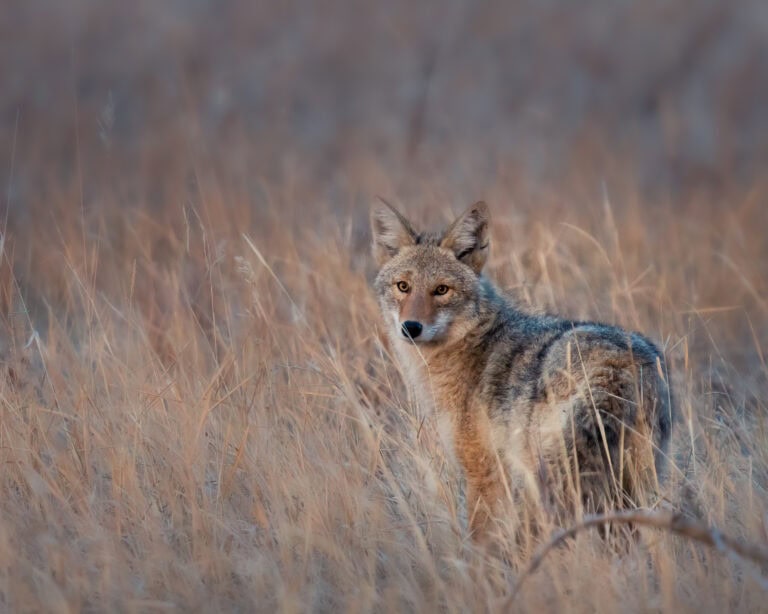
“The claim of mistaken identity here may well be genuine, and the hunter did the right thing by reporting it,” said Mark Surls, Colorado & Rockies Coordinator, Project Coyote. “But we cannot let the allowance for rampant killing of coyotes become a built-in excuse for the illegal killing of an endangered species. This was a federal offense, and a protected wolf’s life was lost because its canine cousin, the coyote, is widely persecuted and most people, including some hunters, apparently can’t tell the difference between the two animals. That’s a serious problem for wolf recovery, a tragic situation for coyotes, and a serious problem for enforcement of the law.”
Project Coyote says the case is not an isolated mistake but the predictable outcome of an open coyote hunting season with few restrictions, in a state where wolves and coyotes share the same landscape.
“Wolves and coyotes are close relatives, and both are highly intelligent and emotional social animals who form deep family bonds and suffer when those ties are broken,” said Marc Bekoff, Ph.D., professor emeritus of ecology and evolutionary biology at the University of Colorado, Boulder and Project Coyote Science and Ethics Advisory Board member.
“This sad and avoidable situation shows how their two fates are tied together. Coyotes are so widely persecuted and so rarely protected, a wolf can be shot and the excuse of mistaken identity conveniently and categorically accepted. We’re told the shooter was merely cited for his deadly error in species identification because ‘he made the ethical choice to immediately report the incident,’ but there were no other charges and he retains his hunting license. We won’t get wolf recovery right until we also get coyote policy right,” Bekoff opined.
“A wolf population this young has no margin for error. Colorado’s British Columbia cohort has already lost nearly half its wolves, and that kind of attrition can stall a recovery effort for years,” said Dave Parsons, M.S., Project Coyote Science and Ethics Advisory Board Member. “It doesn’t matter whether this particular death was unintentional. The population still absorbed the loss the same way. If Colorado wants this program to succeed, its coyote hunting rules can’t keep working against it.”
This is not the first time a Colorado hunter has mistaken a wolf for a coyote. A similar case occurred in 2015 near Kremmling. In May 2025, a wolf died from injuries sustained in a legally placed foothold trap intended for a coyote. Similar cases have occurred nationwide as well.
CPW officials have said that with the state’s reintroduction effort facing delays in bringing additional wolves to Colorado, every individual mortality now carries greater weight for the program’s long-term success in establishing a healthy and self-sustaining population.
Project Coyote is calling on CPW and the CPW Commission to:
- Establish a short, closed hunting season for coyotes, which currently allows for year-round killing.
- Prohibit night hunting of coyotes on both public and private lands, a practice that increases the chance of mistaken identity.
- Require additional safeguards, such as mandatory species-identification training for hunters and a prohibition on coyote trapping, in areas that overlap with active wolf territory.
“Colorado’s wolf reintroduction progress cannot hold if the policies that allow near-unrestricted coyote killing continue to put wolves at risk,” concludes Surls. “Both species are vital to the state’s environment and deserve protection.”
Project Coyote is a fiscally sponsored project of Earth Island Institute, a 501c3 nonprofit. Project Coyote’s mission is to promote compassionate conservation and coexistence between people and wildlife—particularly North America’s wild carnivores—through education, science, advocacy, and coalition building. Led by scientists, educators, and wildlife advocates, Project Coyote works to change policies and perceptions to protect wild carnivores and foster ethical, ecologically sound stewardship.
Learn more at www.ProjectCoyote.org.
###