

Every year, I sit down to reflect on what Project Coyote accomplished in that year, and every year I’m reminded that this work doesn’t move in a straight line. It moves in fits and starts, in court filings and commission hearings, in volunteers picking up the phone one more time, in a neighborhood deciding not to call the trapper after all. Our 2025 Impact Report, Changing the Story for Wild Carnivores, is our attempt to capture our collective hard-won progress in one place, and as I look back on the year, a few moments keep surfacing.
I think about Jane McBride, our Illinois State Representative, who spent the year fighting for SB 3063 to ban wildlife killing contests in her state. When the Illinois Department of Natural Resources declined to act and sent advocates to the legislature instead, the coalition simply pivoted and kept going. Jane told us that by the end of the campaign, when legislative staff picked up the phone, they assumed before the caller even spoke that it was about banning wildlife killing contests. That’s what sustained pressure looks like, and it’s a big part of why ten states have banned these contests and others, such as Illinois and New Jersey, are actively considering legislation of their own.
I think about Mark Surls, who joined our staff in January 2025 and was almost immediately seated at the table where Colorado was reviewing its furbearer hunting and trapping rules for the first time in years. The recommendations now driving Colorado’s rule change campaign are the most significant challenge to those policies in years, and we’re not finished pushing them across the line.
I think about California, where the Wildlife Resources Committee has considered removing coyotes from the state’s list of non-game animals, a classification that has let anyone kill them, anywhere, anytime, for any reason. We brought the science, the experts, and the public pressure to cast a bright light on the issue. The Commission hasn’t acted on it yet, and we intend to keep reminding them to do so.
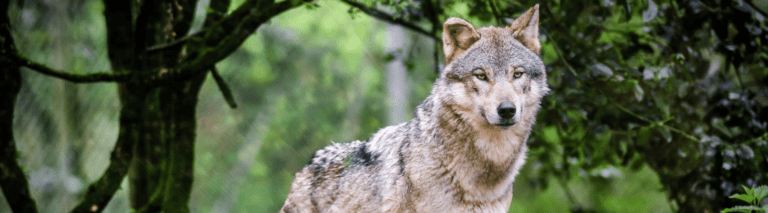
None of this is easy, and I won’t pretend 2025 was all forward motion. Montana’s Fish, Wildlife & Parks Commission approved a quota to kill 558 wolves this year, a number the state’s own data suggested could push the population below sustainable levels within a single year. We’re still in court over protecting Montana’s wolves alongside WildEarth Guardians, Gallatin Wildlife Association, and Footloose Montana, because what’s happening there isn’t sound wildlife management, it’s potential eradication.
We also mobilized more than 8,500 supporters against H.R. 845, a bill that would have stripped Endangered Species Act protections from wolves entirely and blocked courts from ever intervening on their behalf. Wolves have lived through this story before. When federal protections were stripped away in January 2021, Wisconsin hunters killed nearly 220 wolves in under three days, almost double the state’s quota. We carry that history with us into every delisting fight that follows it.

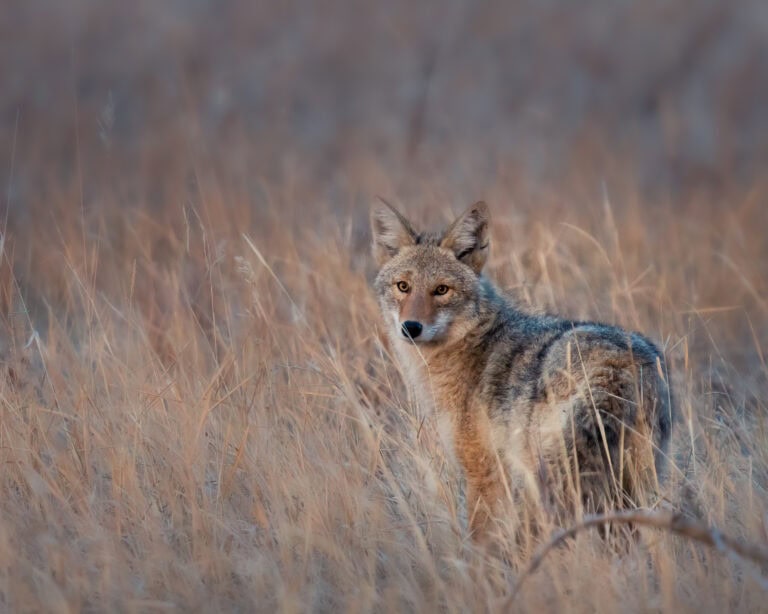
But the story I keep returning to, the one that encapsulates why we do any of this, happened much closer to the ground. A Los Angeles neighborhood in Baldwin Hills was on the verge of hiring trappers after a string of coyote sightings, which would likely have meant death for the local pack. Concerned neighbors reached out to us before things escalated. We helped them organize a presentation through their homeowners’ association, and more than 30 people showed up to learn about coyote behavior, why sightings so often get misread as threats, and how to actually reduce conflict.
By the end of the meeting, many said they felt far less afraid, and the plans for trappers were dropped entirely. The community put up educational signage, built a website, and began coexisting compassionately with their wild neighbors. One resident later told us that our science-based materials and the personal guidance our team gave them were what made the difference.
It’s why we launched our second Coyote Awareness Week in 2025, uniting 23 partner organizations and reaching over 180,000 people, and why our Wolf Awareness Week reached well over 125,000 more. It’s why we trained 20 new state advocate volunteers, gave more than 40 public presentations across North America, and put coexistence tools directly into the hands of 12 communities in California, Colorado, and Texas. Every one of those numbers represents a person who showed up, a donor who gave for the first time, a photographer who picked up a camera instead of a gun, a volunteer who testified at a commission meeting they didn’t have to attend.

We chose the coyote as our flagship species eighteen years ago because their story is the clearest distillation of everything wrong with how this country treats wild carnivores, and everything possible if we change course. Coyotes are resilient, and that resilience has been used against them for a century, treated as proof they’re expendable rather than proof they deserve better. If we can shift how people think about and treat coyotes, I still believe we can shift how people think about and treat every wild carnivore still caught in outdated, unscientific policy. Through the coyote, fear can give way to understanding, misunderstanding to respect, and persecution to coexistence.
Thank you to everyone whose support made progress possible, and who will be with us for the work still ahead. None of this has been easy. But it has always been fueled by the same belief that first inspired me to start this organization. That science applied with compassion is the path forward. And just like the coyote, together, we adapt, we persist, and we do not give up.
As you read our 2025 Impact Report, know these wins are ours to celebrate collectively. Without your support, whether through donations, hours of service, or letters written to legislators, none of this would have been possible. Thank you.
Read our full report here.