

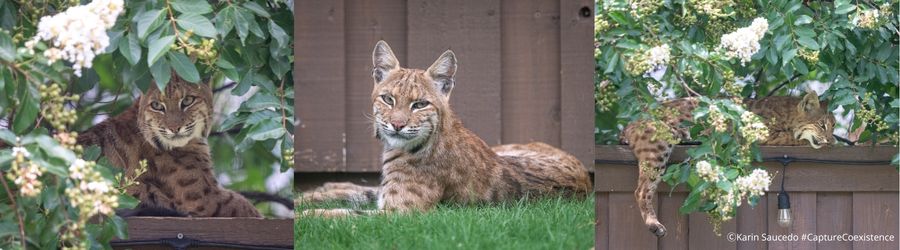
In a North Texas neighborhood, where backyards, fences, roads, and several creek corridors are connected, a female bobcat has been moving mostly unseen for years. In the four years I’ve been photographing her and watching the challenges to survival that she faces, she has become a familiar presence–though her innate wariness of people means she is rarely seen for long.
She has been using this area for years, long enough to learn the cover, the travel routes, and the places where she can raise kittens with less disturbance. Observing her over time has made me think about how much of her life has unfolded here, mostly out of sight.
For people who see a bobcat in their backyard, on a surveillance camera, or near a neighborhood drainage area, the experience can feel surprising. It can also bring concern. People may wonder why she is there, whether she is dangerous, or why she would be so close to homes.
A bobcat sighting offers a brief and unique glimpse into a wild life that has likely been nearby all along.
How Bobcats Move Through the Suburbs
Bobcats are native to ecosystems across most of North America, including forests, deserts, grasslands, and even suburban neighborhoods. They are secretive, naturally wary of people, and remarkably adaptable. Bobcats also play an important role in healthy ecosystems. By hunting rats, mice, rabbits, squirrels, and other small animals, they help keep prey populations in balance.
In developed areas, bobcats may travel along brushy creek corridors, drainage areas, undeveloped or overgrown lots, and dense landscaping. They can also use culverts and storm drains throughout the year as temporary shelter or travel corridors, helping them move through neighborhoods while avoiding roads, people, and other dangers.
For bobcats, these overlooked spaces are vital to their survival, providing cover, access to prey and water, and safer ways to navigate a developed neighborhood.
The Work of a Bobcat Mother
Female bobcats raise their kittens entirely on their own. There is no partner to help hunt, guard the den, move or feed the kittens, or teach them where to find cover. Every decision about where to shelter, when to move, and how to keep kittens safe rests with her.
For a young bobcat, raising her first litter can be especially difficult. She is still learning the landscape: where prey is reliable, which routes are safer, and which places offer enough shelter and privacy for growing kittens. Not every litter survives, and life is hard for young wild animals finding their way through landscapes that are increasingly fragmented by roads and new housing and commercial development, forcing them closer to people who may not always welcome them.
As mothers gain experience, they may become more familiar with places that offer food, cover, and fewer disturbances. They may learn which routes allow them to move more safely and which areas provide temporary refuge while their kittens are still small. They also learn which backyards are less likely to put their young at risk from dogs or other disturbances, even amid familiar neighborhood noise like lawn crews, wind chimes, sirens, and children playing. They take advantage of backyards during quieter periods, including when a home is vacant or a family is away.
That may be one reason bobcats return to the same general areas year after year.
A backyard can sometimes become part of a landscape, which offers access to cover, a quiet route between habitat patches, or resources a mother needs while raising young. Bobcats generally avoid interacting with people, even when they use habitat close to homes.
Mothers may use more than one den site as their kittens grow. They move them between sheltered locations as conditions change or when they need a safer place. They also leave kittens alone while they hunt.
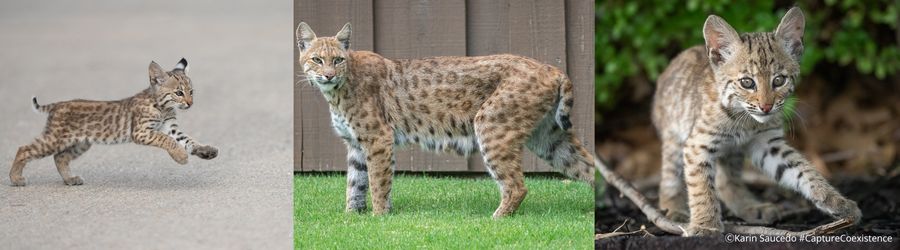
Seeing a bobcat carry a kitten (usually to relocate them) can offer a rare look at this demanding stage of motherhood. While a limp kitten gripped in an adult’s mouth may appear concerning, it is actually a normal part of maternal behavior. Likewise, a kitten found alone is not necessarily orphaned. Its mother may be nearby or out hunting. Unless a kitten appears injured, sick, visibly distressed, or in immediate danger, it is best not to assume it needs rescuing. Moving a healthy kitten can separate it from its mother at a critical time.
What Bobcats Have Taught Me
Photographing bobcats has changed the way I see neighborhoods around me. Vacant lots, storm drains and narrow strips of cover can look ordinary, but to a bobcat, these places are part of a much larger map. Through my camera, I have watched them move with patience and purpose. Over time, I have learned to recognize their patterns. I wait quietly for a head to appear from behind cover, a stretch after resting, or the brief, tender greeting between a mother and her kittens when she returns. They notice everything. They make careful decisions and find ways to survive in spaces that were never designed with them in mind.
I still learn from them every day. Even for those who research bobcats, there is still so much that is not fully understood about their lives. Learning to live alongside them begins with understanding. When communities know why bobcats appear, how mothers care for kittens, and how simple precautions can prevent conflict, fear has less room to grow. Instead, there can be respect, empathy, and a better appreciation for the wild lives moving quietly around us.
For more detailed guidance, see Project Coyote’s Coexisting with Bobcats fact sheet.
A Shared Future
As commercial and residential development continues to reshape urban areas, adaptable native carnivores like bobcats are finding ways to raise young in increasingly human-dominated landscapes.
Giving bobcats space, supervising companion animals and young children, and appreciating the quiet ways they move through our communities are all part of living safely alongside them.
Just as I was working on this piece, I received a text from the family whose backyard the mother I’ve long watched had used before: she is back with a new litter of three kittens. Over the years, she has learned this landscape and called it home. She has grown into a wonderful mother, continually adapting to dramatic changes around her and finding exactly the places needed to give her kittens the best chance to survive.