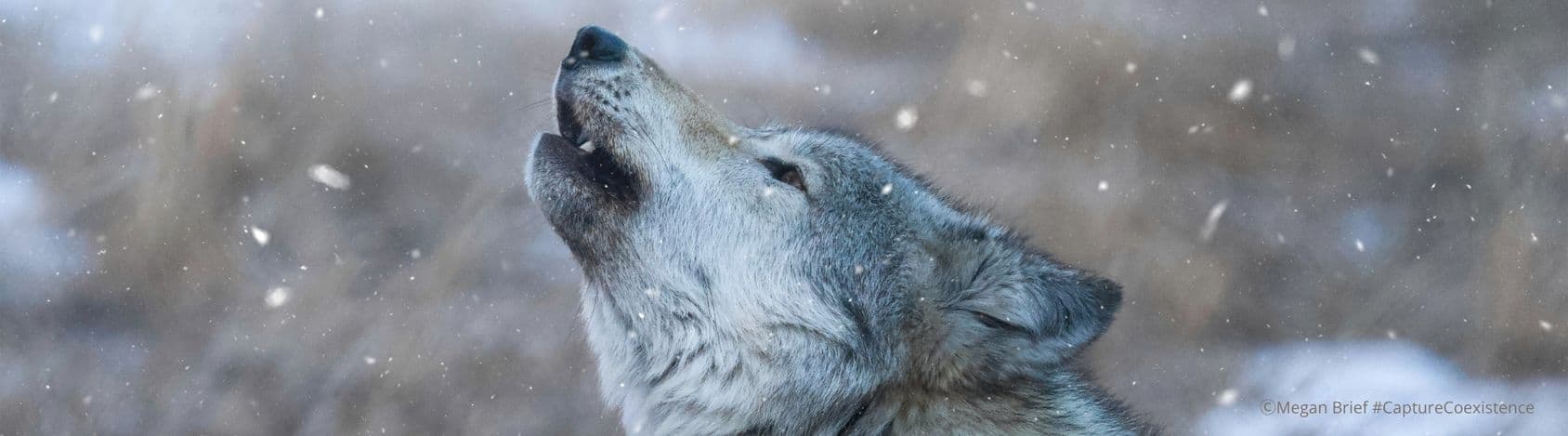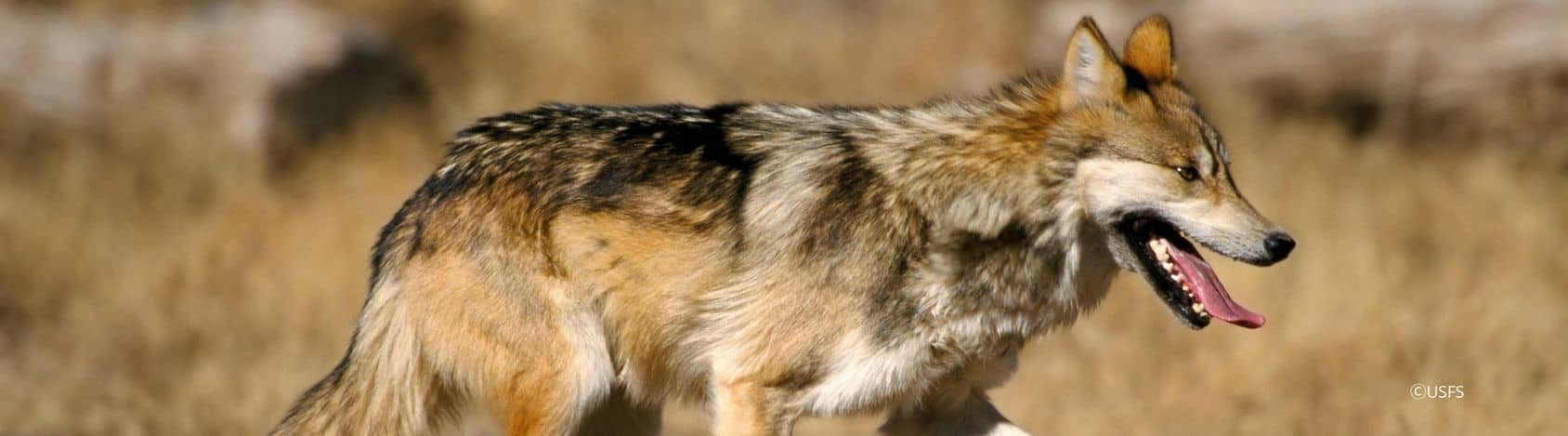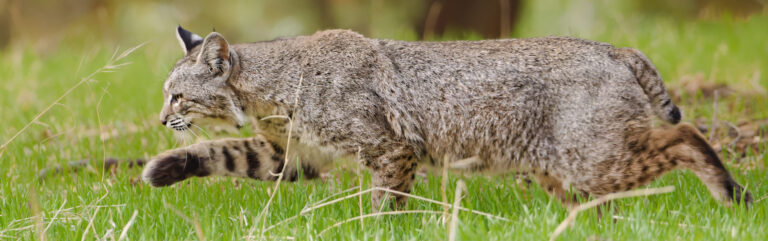


People often ask me why I started Project Coyote and why, of all animals, I chose the coyote as our flagship species. The answer lives at the intersection of my heart and my life’s work.
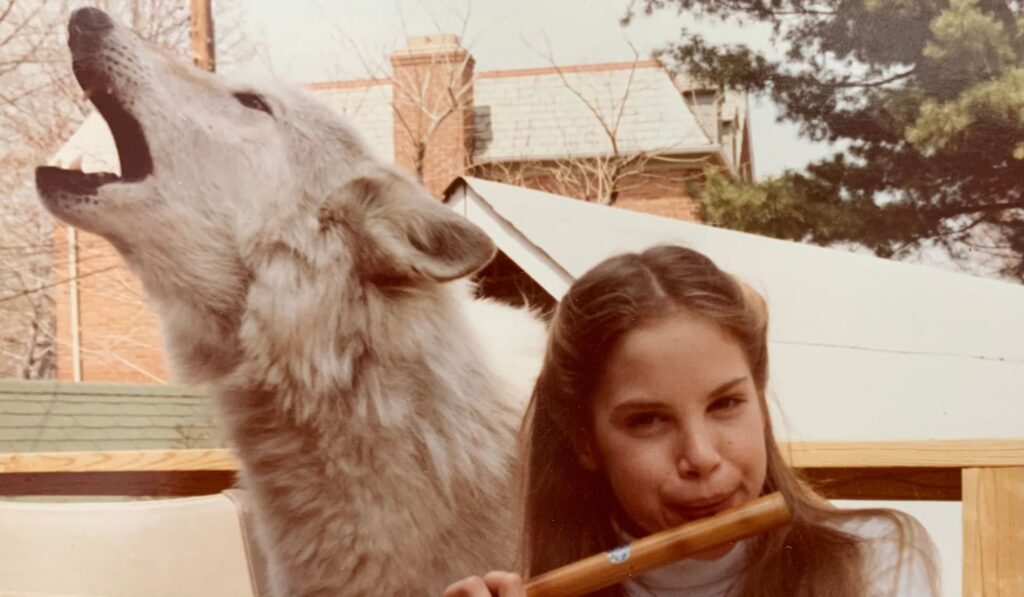
I grew up in a family where the boundary between the human and wild worlds felt wonderfully porous. My father, Dr. Michael W. Fox, studied canine ethology, and a deep respect for animals as sentient beings with emotions, intelligence, and intrinsic worth shaped our lives. We even shared our family with an orphaned wolf pup for many years. Those early experiences taught me something that has become a core value and belief: individual animals matter just as much as species populations.
Later, as I worked in animal protection and wildlife advocacy, I began to see a troubling divide. Conservation often focuses on populations, habitats, and ecosystems. Animal protection focuses on the welfare of individual animals. Too often, these two worlds operate in separate ways, as though compassion for the individual and care for the whole are somehow in conflict. I did not believe they were. I still don’t.
During my decade-plus working for the Animal Protection Institute, I saw firsthand how many native carnivores—especially coyotes and other species lacking meaningful protections—could be trapped, poisoned, shot, and killed year-round in unlimited numbers, often with little public awareness and even less scrutiny. I also saw how desperately communities needed better information, support, and practical tools for coexistence with non-human members.
That gap is what led me to found Project Coyote in 2008 after finishing my graduate degree in wildlife ecology, policy, and conservation. I wanted to create an organization that could bridge conservation and animal protection—one grounded in science, guided by ethics, and committed to coexistence. I also wanted to empower communities, both urban and rural, with the tools, knowledge, and resources needed to peacefully coexist with our wild neighbors, and equip citizens to be a voice for North America’s most maligned and misunderstood wild carnivores.

That vision remains our mission today: to protect North America’s wild carnivores and promote compassionate coexistence through education, science, advocacy, and coalition building. Our vision is a North America where humans and wild carnivores coexist, and ecosystems thrive on Nature’s terms.
Why Coyotes?
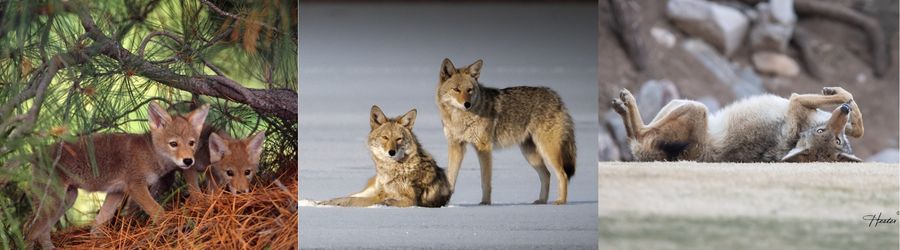
Coyotes are uniquely North American. They are our native song dogs—ecologically important, highly intelligent, deeply social, and extraordinarily adaptable. Many Indigenous cultures have long revered the coyote as a teacher, creator, and trickster. Yet despite their ecological and cultural significance, coyotes have become the most maligned and persecuted native carnivore in North America. In the United States, at least one coyote is killed every minute. They are still subjected to trapping, poisoning, hounding, aerial gunning, wildlife killing contests, and other forms of cruel and indiscriminate persecution.
At Project Coyote, we often say that coyotes represent the most egregious example of unethical and unscientific wildlife “management” in this country. I believe that deeply. Their resilience—the very fact that they can rebound in the face of intense persecution—has often been used to justify their killing. They have survived wave after wave of extermination attempts, adapted to deserts and forests, farms and suburbs, even our most densely populated cities. But resilience should never be mistaken for expendability.
We chose the coyote as our flagship species because they embody both the nonsensical injustice of their persecution and the possibility at the heart of our work. If we can transform the way people think about and treat coyotes, we can help change the way people think about and treat all wild carnivores. In that sense, the coyote is a bridge species to a more ethical and ecological worldview of Nature. Through the coyote, fear can give way to understanding, misunderstanding to respect, and persecution to coexistence. That same conviction is what led us to create Coyote Awareness Week.
We launched the first annual Coyote Awareness Week in March 2024 to raise awareness about the intense persecution and misunderstanding coyotes continue to face, and to elevate a different story—one rooted in science, compassion, and coexistence. It is held each year in the third week of March and leads up to National Coyote Day on March 23. Project Coyote’s 2026 observance runs March 16–22.
Why devote an entire week to coyotes?
Because awareness must be nurtured to change hearts and inform minds. Awareness changes behavior. Awareness changes policy. Awareness can save lives.
Coyote Awareness Week is our opportunity to replace fear with facts and replace persecution with compassion. It is a time to share science, stories, photography, art, and practical coexistence tools that help people truly understand coyotes. Research shows that lethal coyote control is often ineffective and can even increase conflict and increase coyote populations by disrupting family structure. And science confirms that coyotes provide important ecological benefits, from controlling rodent populations to removing carrion and helping maintain healthier ecosystems.
But this week is about more than information. It is about transformation.
It is about recognizing that compassion belongs in conservation.
It is about understanding that individual animals matter, not only populations.
It is about asking whether we are willing to make room for wild lives in a human-dominated world.
And, it is about remembering that coexistence is not passive. It asks something of us: humility, restraint, curiosity, care, and sometimes changes in our own behavior.
Over the years, Project Coyote has worked to challenge outdated wildlife policies, confront cruelty disguised as management, and give communities the tools they need to live more peacefully with wild carnivores. None of this work has been easy. But it has always been fueled by the same belief that first inspired me to begin: that science applied with compassion is the path forward.
I started Project Coyote because North America’s wild carnivores needed a stronger voice. I chose the coyote because she represents both the wound and the wisdom of our relationship with wildlife. And, we created Coyote Awareness Week because changing hearts and minds is not peripheral to this work—it is the work. If we can change the story for coyotes, we can change the story for wildlife more broadly.
This Coyote Awareness Week, I invite you to stand with us. Learn. Share. Speak up. Challenge old myths. Support science-based, compassionate coexistence. Help us build a world where coyotes are no longer treated as targets, but recognized as fellow beings—wild neighbors whose lives matter.
Because when we make room for the coyote, we make room for a more ethical and ecologically sane future—for wildlife, for communities, and for ourselves.