

Go to any wildlife commission meeting in Colorado or around the country and you’ll hear common themes expressed: Hunters and trappers possess a unique understanding of wildlife that the general public doesn’t have. Wildlife policies must prioritize the interests of hunters and trappers because they hold key responsibility for conservation.
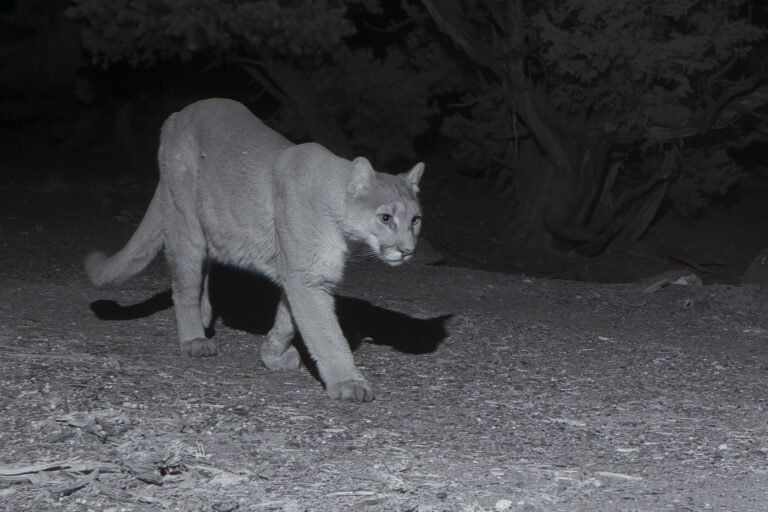
The killing of Wolf 2504-BC by an individual who thought she was a coyote puts those claims of expertise and responsibility to the test.
The January 2026 incident report from Colorado Parks & Wildlife (CPW), obtained by Project Coyote, Science for Colorado Wildlife, and Western Watersheds Project, details the killing and the absence of any justification. The shooter was in his cabin making breakfast when he saw what he thought was a coyote at his pond. He grabbed his rifle, went outside and took a shot at 200 yards. There is nothing in the report to indicate that the coyote was doing anything but existing on the landscape, which is, for coyotes across the country, justified as reason enough to be shot.
What the shooter didn’t do is also shocking. He didn’t check on the “coyote” to ensure she wasn’t wounded and suffering, as both Colorado statute and hunter safety education require. Instead, he went back inside to eat his breakfast. An hour later, he got in his truck to pick up the “coyote,” which had managed to move 15 yards after being shot. He later told a CPW officer that only then did he notice the bright pink tracking collar on the female wolf–who was roughly double the weight of a Colorado coyote–and decided to report it to the agency.
Ultimately, CPW decided that 2504-BC’s killer committed an “honest mistake” and deserved only the charge of a misdemeanor and a $140 fine. Colorado’s wildlife agency unfortunately didn’t seem to think that the state’s protected and rare wolves, or their coyote cousins, deserve better.
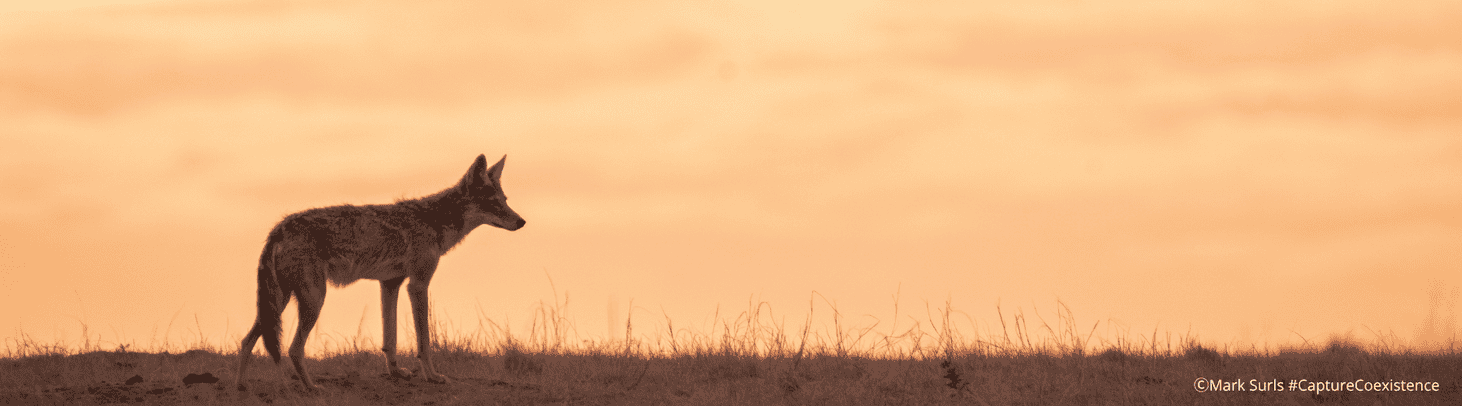
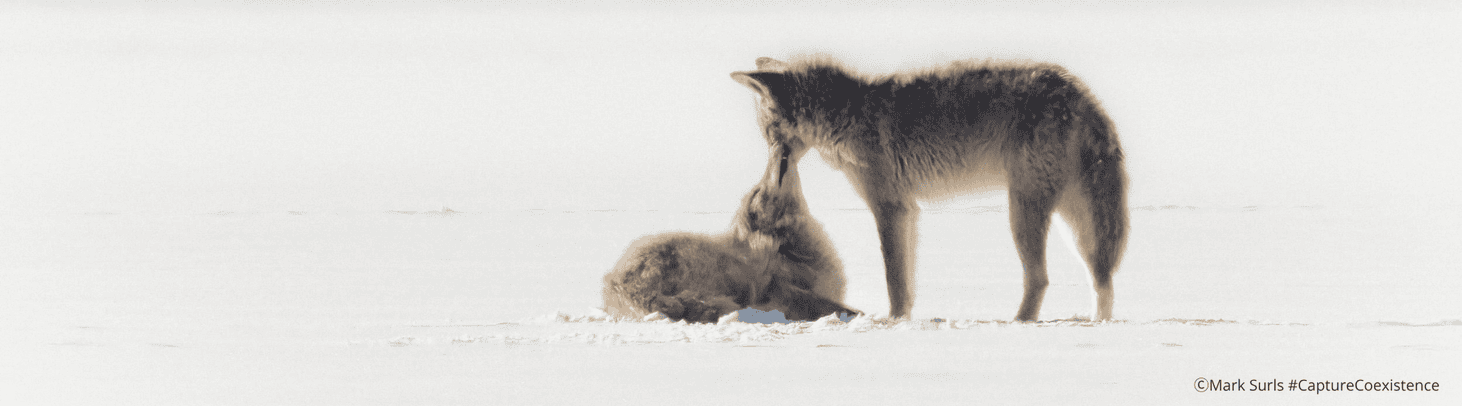
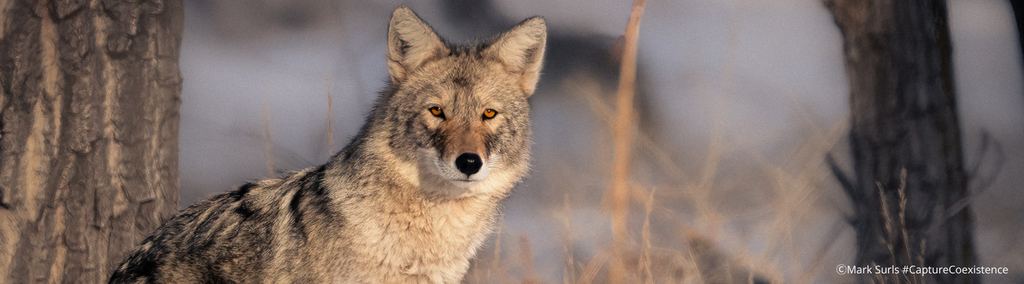
As a wildlife photographer who has spent thousands of hours observing and photographing wild canids, the number of times I have photographed a wolf that I thought was a coyote is exactly zero. Even at considerable distances, an experienced observer can often distinguish the two species by their distinctive gaits. In addition, 2504-BC was 80 pounds. CPW informs hunters that wolves in Colorado are “twice the size of coyotes.” In addition to mass, body proportions, ears, legs, tails, and any vocalizations all add up to a fairly straightforward determination of the two species.
But nobody needs to be an expert in canid morphology to understand the most important rule in hunting: if you aren’t certain what animal you’re looking at, or if you suspect you might be aiming at a protected or endangered animal – just don’t pull the trigger.
In fact, the study guide for the Colorado hunter education test also states, “Developing wildlife identification skills is a basic requirement for hunters.” In this case, the shooter— who wasn’t behaving like a responsible hunter by nonchalantly killing a coyote for no reason while preparing breakfast— failed to meet this basic requirement. He quickly followed up with this failure by not checking to make sure the animal had been quickly killed and not subject to additional pain and suffering.
The hunting community’s claim to exceptional wildlife knowledge must carry exceptional responsibility. If hunters and trappers want policymakers and the other roughly 94% of Coloradans who don’t hunt or trap to defer to their experience in the field, that expertise should be reflected in their decisions in the field. Any lapses–as in the case of 2504-BC’s tragic and callous killing–must be rigorously punished, not treated as a simple or acceptable mistake. Furthermore, CPW and wildlife agencies everywhere need to ensure that hunters can demonstrate their ability to differentiate among similar looking species.
This problem extends beyond the misidentification of wolves and coyotes. According to CPW data from 1999-2009, 21 reintroduced and protected Colorado lynx were shot or “probably shot.” However, no lynx has been reported as shot since CPW stopped using radio collars to track them in 2011 and none have ever been reported as being caught in a trap set for a bobcat. Is this simply luck or is there a chance that once state monitoring tools were no longer being used, no one felt the need to report an illegal killing? Judging from the number of “shoot, shovel, and shut up” comments found on social media regarding wolves, that seems like a distinct possibility when it comes to lynx.
Also in the 1990s, the Department of Wildlife (now CPW) lumped kit foxes together with swift fox when collecting hunting and trapping data. Although these two species can be difficult to distinguish due to their similar weights, they also have distinct features. In the past, swift and kit foxes only overlapped in a tiny portion of the vast open lands of Colorado. Nonetheless, CPW never required hunters to identify which species they were killing–and today, the kit fox is classified as state endangered, with a high probability that they are no longer present in the state.
The potential for misidentification is a key reason why Colorado needs to strengthen regulations governing the killing of coyotes, bobcats, and foxes. Key steps include short hunting and trapping seasons, restrictions on killing a species in areas where similar looking but protected species live, and a mandatory, rigorous visual test as part of hunter licensing. Even Wyoming, a state that is notorious for its anti-carnivore policies, mandates the passage of a test to demonstrate a hunter’s ability to differentiate the widely hunted black bear from a protected grizzly bear.
Hunters and trappers should be represented in wildlife-management decisions, but conservation expertise doesn’t belong exclusively to one group. Colorado’s wildlife is held in the public trust for all Coloradans. Hunters, photographers, wildlife watchers, ranchers, and people who may never actually see many of the species who call Colorado home all have a legitimate voice in how our wildlife is managed and protected for current and future generations. With rights comes responsibility, and actions demand accountability, including knowing which animal’s life you’re taking before you pull the trigger.